01SEE
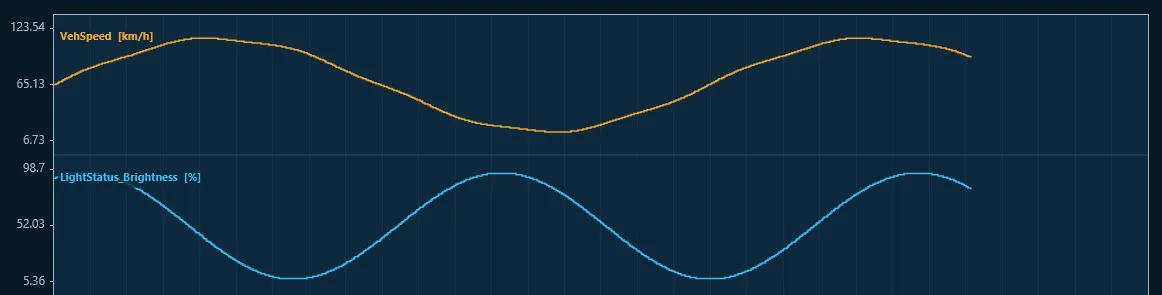
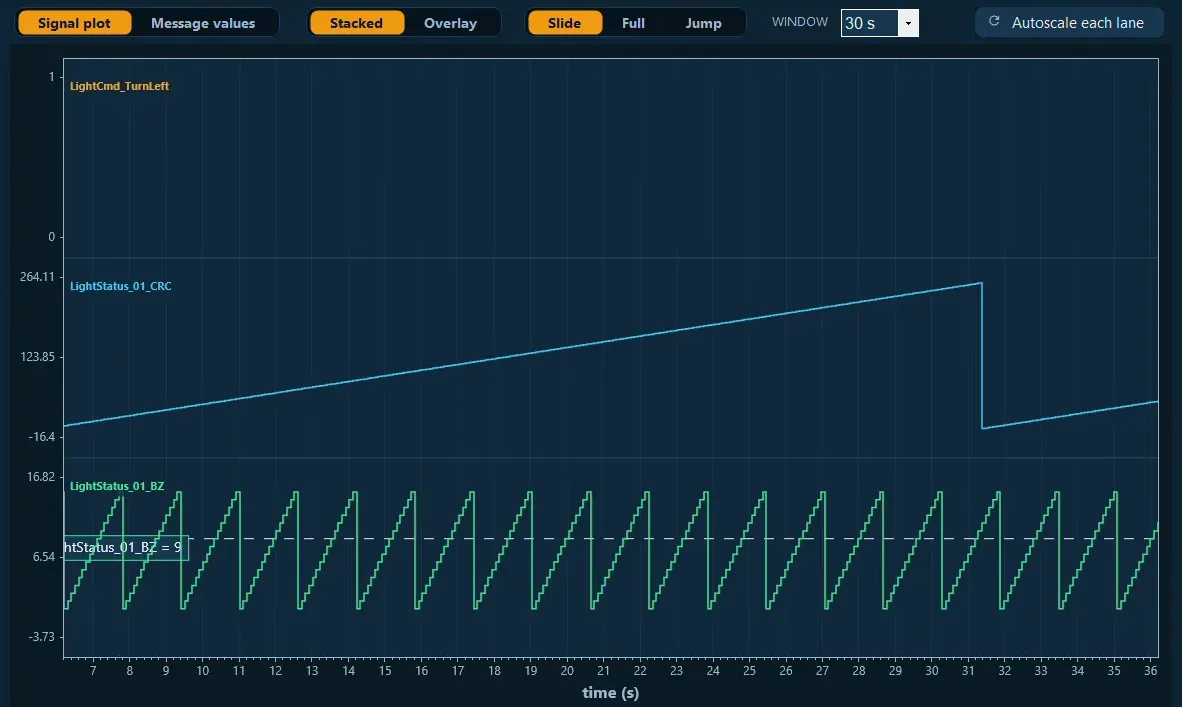
Watch the bus.
Decoded live against your own network matrix.
 RE4AAutomotive engineering & security tools
Each ECU, tested against its own declared PDX/ODX. AI test plans from your TARA: available to demo.
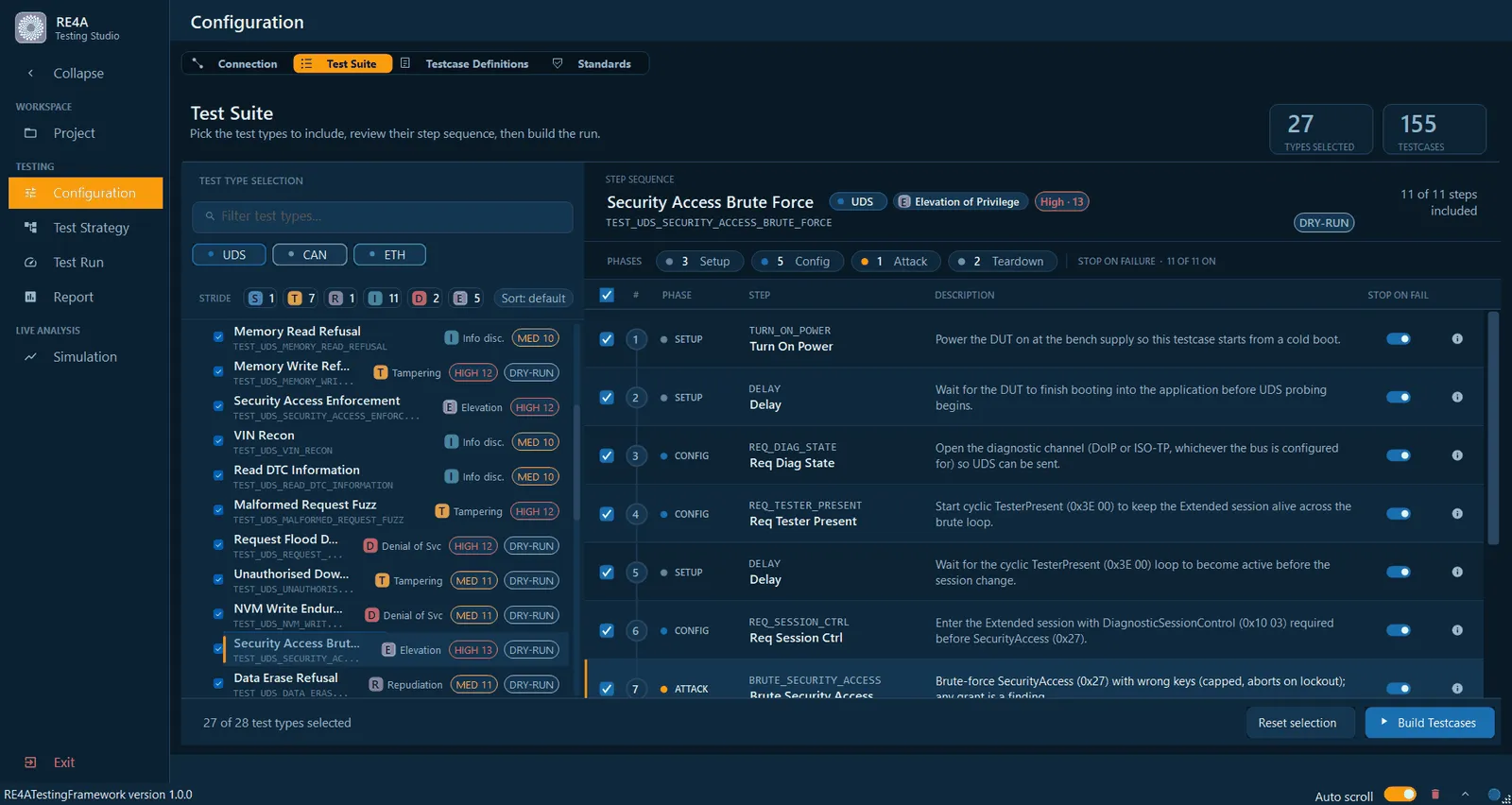
built-in test types · 27 armed by default
UN R155 Annex 5 rows assessed7 mapped12 partial2 gap11 out of scope
selectable standards profiles: UN R155 Annex 5 and GB 44495-2024
01SEE
Decoded live against your own network matrix.
02ATTACK
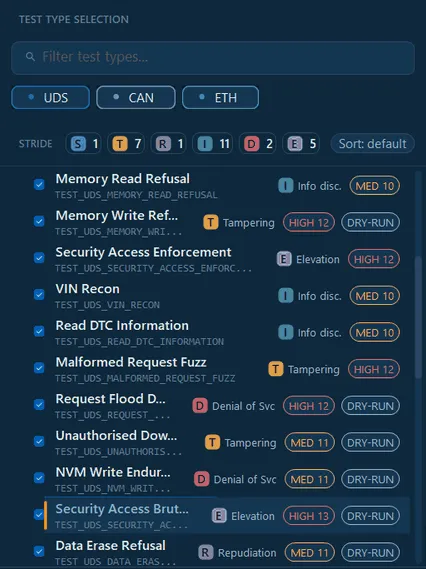
28 built-in test types, 27 armed by default.
03PROVE
Verdicts against the ECU’s own PDX/ODX.

AI Assist
Available to demo · included in the Pentest and Fuzz editions
Extracts the cybersecurity requirements the workbook contains, for you to confirm.
Resolves what each requirement protects onto the ECUs, buses and services in your matrix.
Selects, clones or generates testcases from the built-in library, ranked with a rationale and UN R155 Annex 5 / GB 44495 references.
A security engineer accepts, edits, adds or rejects each proposal, then arms what runs.
The attack surface
One ECU may sit on three buses at once.
Capabilities
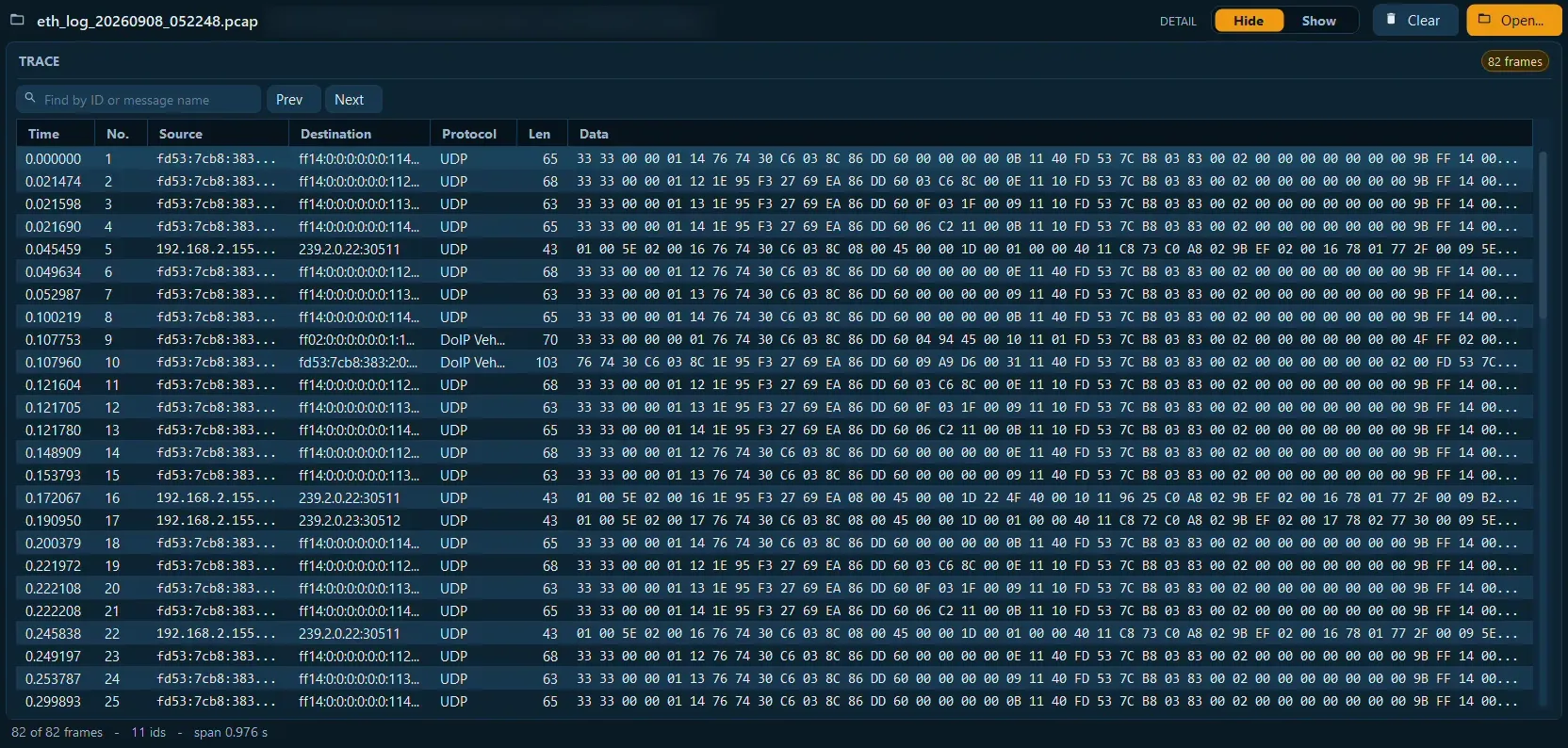
CAN, CAN-FD and dual-stack Automotive Ethernet, decoded live against your own matrix.
UDS over DoIP and ISO-TP, probing within the ECU’s own declared policy.
Spec-differential verdicts against PDX/ODX; destructive tests stay dry until you arm them.
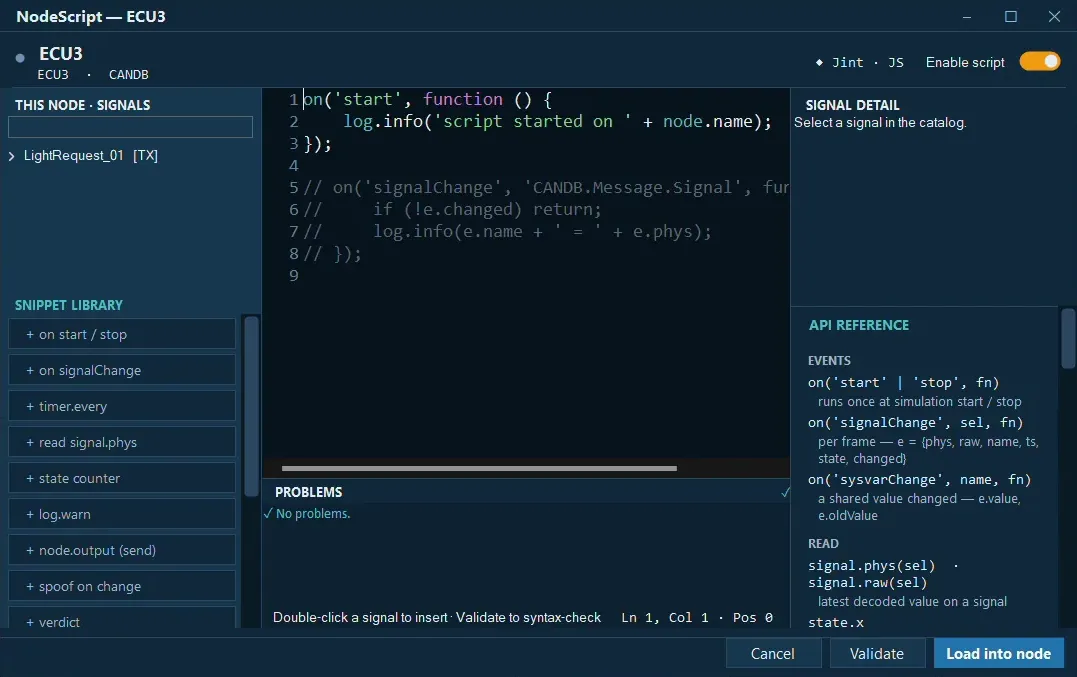
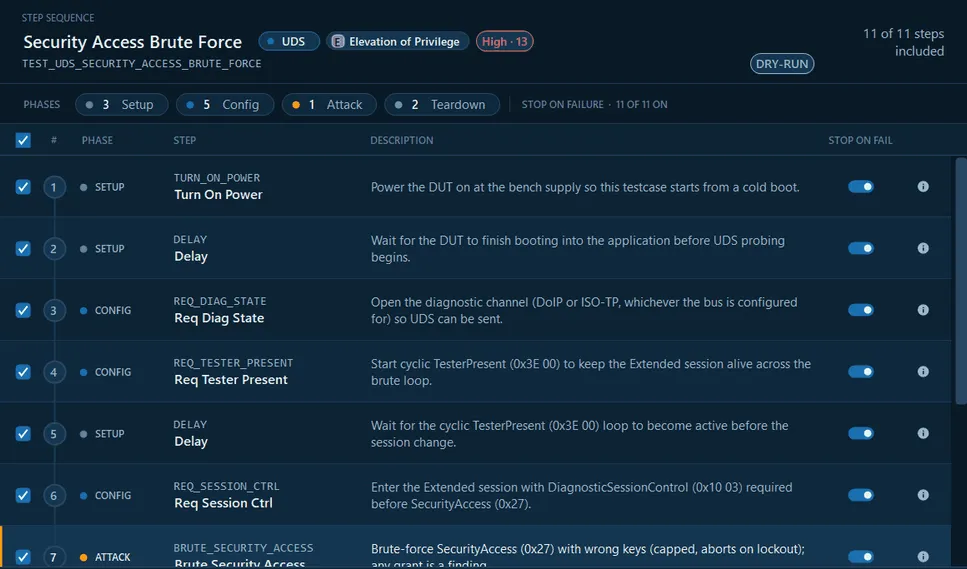
SETUP · CONFIG · ATTACK · TEARDOWN steps, template cycles you can customise with the verdict steps locked, and NodeScript nodes.
Coverage and verdicts reported separately, each result with an explicit evidence role, and customised runs flagged.
Two selectable profiles: UN R155 Annex 5 and GB 44495-2024.
In action

The oracle
Anything answered outside the PDX/ODX is a finding, already argued.
Coverage, stated honestly
Annex 5 Table A1: 32 indexed rows, 30 threats, 69 attack examples.
Direct test evidence
Partial evidence
In scope, not yet built
Not reachable from the bus
| Annex 5 row 1: OUT | Annex 5 row 2: OUT | Annex 5 row 3: OUT | Annex 5 row 4: OUT | Annex 5 row 5: OUT | Annex 5 row 6: PARTIAL | Annex 5 row 7: PARTIAL | Annex 5 row 8: MAPPED | Annex 5 row 9: PARTIAL | Annex 5 row 10: OUT | Annex 5 row 11: OUT | Annex 5 row 12: OUT | Annex 5 row 13: PARTIAL | Annex 5 row 14: MAPPED | Annex 5 row 15: PARTIAL | Annex 5 row 16: GAP | Annex 5 row 17: PARTIAL | Annex 5 row 18: MAPPED | Annex 5 row 19: PARTIAL | Annex 5 row 20: MAPPED | Annex 5 row 21: PARTIAL | Annex 5 row 22: PARTIAL | Annex 5 row 23: MAPPED | Annex 5 row 24: PARTIAL | Annex 5 row 25: GAP | Annex 5 row 26: MAPPED | Annex 5 row 27: PARTIAL | Annex 5 row 28: OUT | Annex 5 row 29: PARTIAL | Annex 5 row 30: MAPPED | Annex 5 row 31: OUT | Annex 5 row 32: OUT |
The catalogue
In the default campaign: selected when a run starts. Dry run until armed: sends nothing until armed.
All 28 built-in test types by STRIDE class: S1 T7 R1 I11 D3 E5
Showing 28 of 28 test types
| ID | Test type | STRIDE | In the default campaign |
|---|---|---|---|
| UDS_001 | Session discovery | I | Yes |
| UDS_002 | Service discovery | I | Yes |
| UDS_003 | Security-access enforcement | I | Yes |
| UDS_004 | Security-access brute forceDry run until armed | E | Yes |
| UDS_005 | DID write protectionDry run until armed | T | Yes |
| UDS_006 | DID read enumeration | I | Yes |
| UDS_007 | Memory read access | I | Yes |
| UDS_008 | Memory write accessDry run until armed | T | Yes |
| UDS_009 | Malformed request handlingDry run until armed | T | Yes |
| UDS_010 | Request denial of serviceDry run until armed | D | Yes |
| UDS_011 | Firmware-download refusalDry run until armed | E | Yes |
| UDS_012 | NVM write enduranceDry run until armed | D | No |
| UDS_013 | Routine control abuseDry run until armed | E | Yes |
| UDS_014 | Communication control abuseDry run until armed | T | Yes |
| UDS_015 | Tester-present starvationDry run until armed | E | Yes |
| UDS_016 | Session transition integrity | T | Yes |
| UDS_017 | Negative-response conformance | R | Yes |
| ETH_001 | Frame fuzzingDry run until armed | D | Yes |
| ETH_002 | SOME/IP service scan | I | Yes |
| ETH_003 | SOME/IP method abuseDry run until armed | I | Yes |
| ETH_004 | DoIP routing abuseDry run until armed | I | Yes |
| ETH_005 | Port scan | I | Yes |
| ETH_006 | TLS configuration audit | I | Yes |
| ETH_007 | Network segmentation check | I | Yes |
| ETH_008 | ARP / neighbour spoofingDry run until armed | S | Yes |
| CAN_001 | Signal fuzzingDry run until armed | T | Yes |
| CAN_002 | SecOC authenticity | T | Yes |
| CST_001 | Custom builder (NodeScript)Dry run until armed | E | Yes |
27 of 28 test types are armed by default.
The evidence model
Step status — deliberately not the verdict
Synthetic demo run
Pipeline
AI proposes · you approve
Datasheet
Evaluate it
Rest-bus simulation around one real ECU. No hardware needed.